How many hosts should a restaurant schedule at the stand on a Friday night?
One host, two, or a full front-door team? The answer depends on covers, layout, and how much of the work your tools absorb. A practical way to size the stand.
Start with the jobs, not the headcount
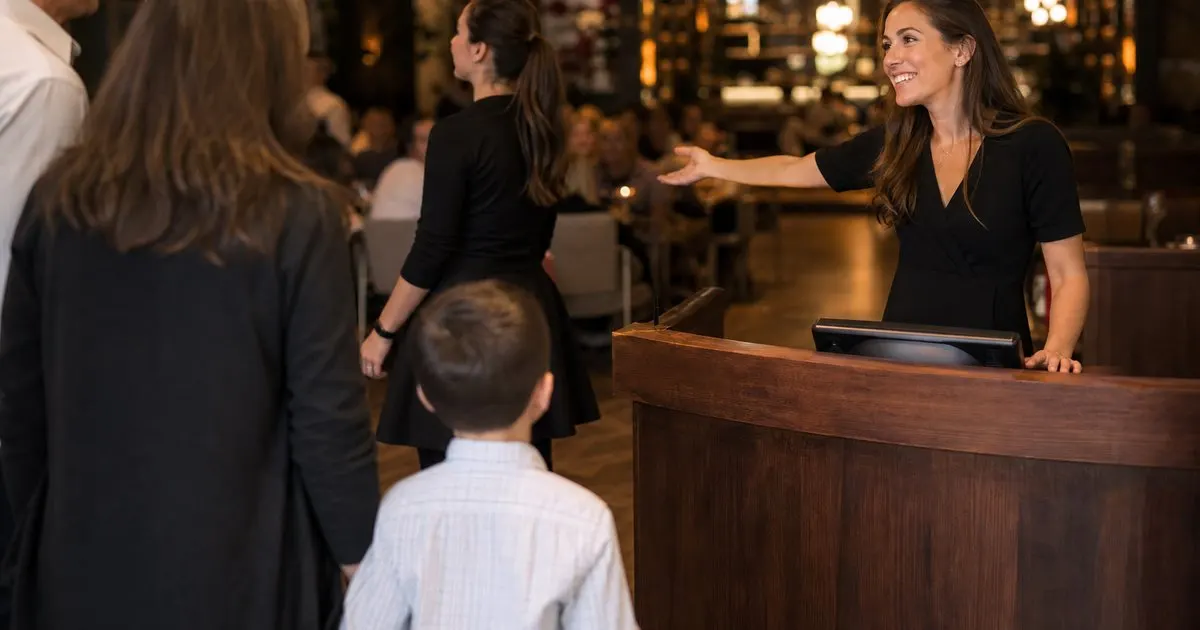
A busy stand has four distinct jobs: greeting and checking in, quoting and managing the list, walking parties to tables and handing off to servers, and answering the phone. On a slow night one person does all four. On a Friday, the question is which of those jobs can no longer share a body. The usual breaking point is the walk: the moment the host leaves the stand to seat a party, nobody is greeting, nobody is answering the phone, and the list stops moving.
So the first added host is almost always a seater, someone whose job is to take parties to tables, refresh the stand's picture of the room, and tell the list host which tables just opened. The second added host, if the volume justifies it, takes the door and the phone so the list host can focus purely on the list and the quotes. Think of it as separating the moving job from the thinking job from the talking job.
Keep reading: How do you text guests the moment their table is ready reliably?, How do you quote accurate wait times so guests are not frustrated?, How do you manage a restaurant waitlist during a packed weekend rush?. See how TablePingr helps you guest table-ready sms paging for restaurants.
Rough guidelines by covers and layout
There is no formula that fits every room, but there are useful patterns. A single host can usually handle a room where the wait rarely exceeds a handful of parties and the tables are close to the stand. Once a Friday regularly builds a list of ten or more parties, with a lobby full of people asking about their wait, a second host pays for itself in seated covers and calmer guests. Large rooms, multiple dining areas, a patio, or a second floor push toward a third person because the walk to seat a party takes longer and the list host is blind to what is opening up. Related: How do you quote accurate wait times so guests are not frustrated?
The phone is the wildcard. A restaurant that takes a lot of calls on Friday, whether for takeout, reservations, or wait questions, can lose a full host to the phone alone. If that is your situation, either add a person or move the phone away from the stand to a back office or to a manager. A ringing phone that nobody answers hurts both the caller and the guest standing in front of a host who is torn between the two. Related: Why should a restaurant ditch physical pager buzzers for guest text paging?
How your tools change the number
Some of the stand's work can be absorbed by the tools you use. Text paging removes the job of physically finding guests in the lobby and calling names over the noise, which is a surprising amount of a host's time on a busy night. Self check-in from a guest's phone removes typing. A waitlist tool that shows quoted times and positions lets the guest answer their own how-much-longer question from their phone instead of walking to the stand and asking. Related: How do you text guests the moment their table is ready reliably?
That does not mean one host with good software equals three hosts with a clipboard. What it means is that the second host you add on a Friday can spend their time seating and greeting instead of shouting names. Restaurants that switch to SMS paging often find the same headcount handles a noticeably longer list, and the lobby feels calmer because nobody is straining to hear their name. Size your team to the jobs that remain after the tools have done their part.
Scheduling the shift, not just the peak
Friday is not uniformly busy. The stand may need one person at five, three at seven, and one again by nine thirty. Stagger start times so the second and third hosts arrive just before the list starts building, and let the first host leave once the list shrinks. This is cheaper than staffing three for the whole night and it also keeps the most experienced host on the stand during the true peak, which is when quotes matter most. Related: How does a smooth host stand shape the whole guest experience each night?
Finally, put the strongest quoter on the list and the most personable person at the door, and be honest about who those people are. A host stand team is not interchangeable. The list host needs to read the room and predict turns; the door host needs to make a party that just heard forty-five minutes feel welcome anyway. Schedule for those strengths, and revisit the numbers every few weeks against how long your list actually got and how many pages went unanswered.
- Split the stand into four jobs and add hosts as the walk, the door, and the phone stop fitting in one person.
- A regular Friday list of ten or more parties is usually the point where a second host pays for itself.
- Text paging and self check-in shrink the work per party, so the same team handles a longer list.
- Stagger start times around the true peak and put your best quoter on the list.

Julien Jimenez
Julien Jimenez is an independent software builder based in Paris. He designs, ships, and operates focused SaaS products for small businesses and independent professionals. Read the full author page.
Text Guests The Moment Their Table Is Ready
Guest table-ready SMS paging for restaurants. TablePingr is built to help you put this into practice.
Start free trialMore from the TablePingr blog

How do you text guests the moment their table is ready reliably?

How do you quote accurate wait times so guests are not frustrated?

How do you manage a restaurant waitlist during a packed weekend rush?
Get the TablePingr playbook
Practical guides on host stand and waitlist, straight to your inbox as we publish them. No spam, unsubscribe any time.